

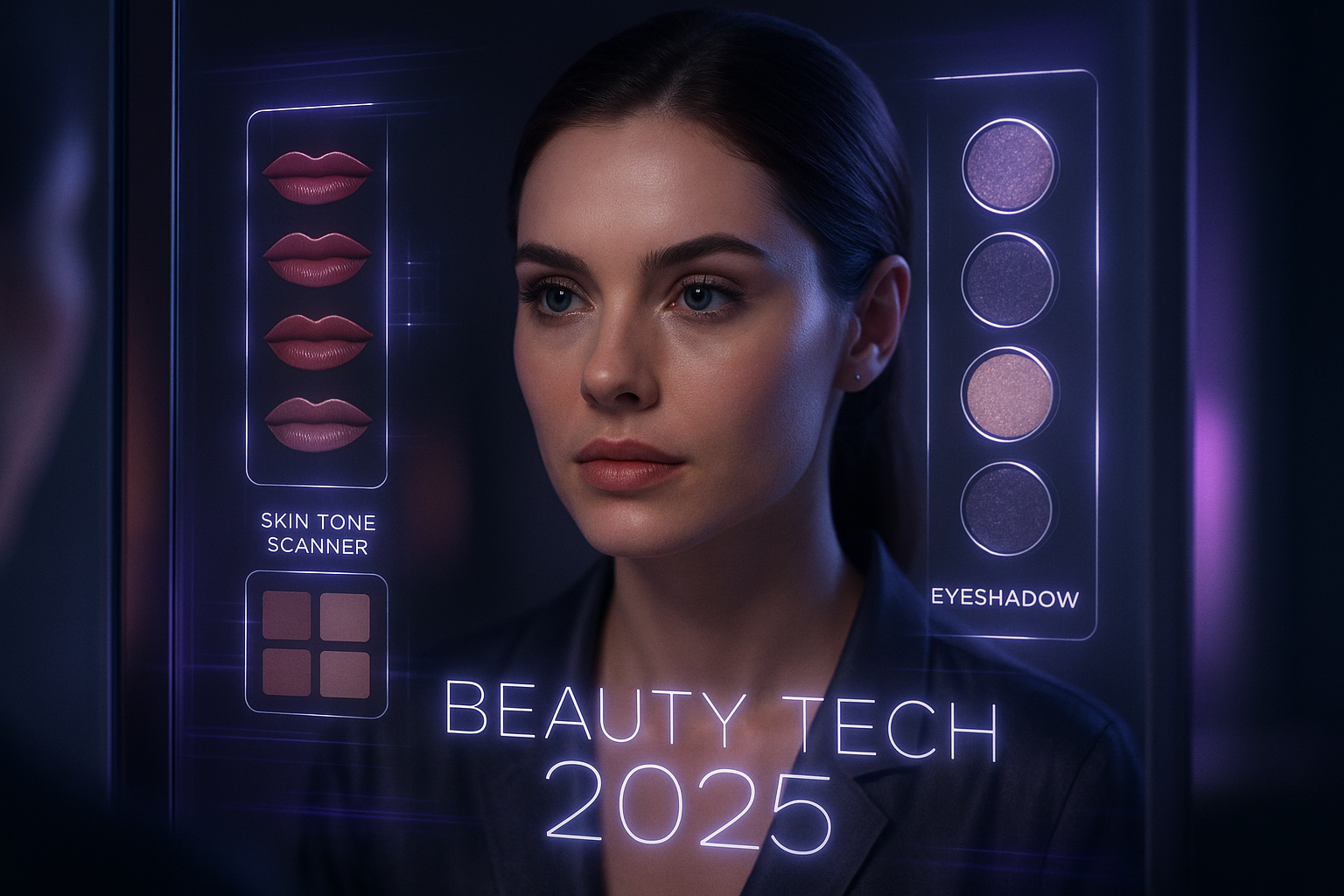
In 2025, beauty and technology have officially merged. From AI-driven makeup advisors to virtual mirrors that let you test lipstick shades instantly, the industry is being re-engineered by innovation. Consumers want precision, personalization, and sustainability — and tech is delivering it with a touch of glamour. Let’s explore how AI and AR are reshaping the future of beauty in 2025 and beyond.
Table of Contents
- Introduction
- 1. AI Personalization in Makeup & Skincare
- 2. Virtual Try-Ons & AR Mirrors
- 3. Beauty Brands Leading the Tech Revolution
- 4. Sustainability Through Smart Manufacturing
- 5. Smart Beauty Devices at Home
- 6. The Future of AI in Beauty
- Conclusion
Introduction
Beauty Tech 2025 is about more than apps and gadgets — it’s a movement toward data-driven confidence. With AI analyzing skin health, augmented reality creating custom looks, and 3D printing producing on-demand products, beauty is becoming as personal as your fingerprint.
1. AI Personalization in Makeup & Skincare
- Skin analysis apps scan your face for hydration, pigmentation, and texture to recommend perfect products.
- AI foundation matching uses color recognition to blend exactly to your undertone.
- Smart routines adapt your skincare order based on weather and stress levels.
- Predictive beauty AI forecasts how skin will look after weeks of use to measure results accurately.
Brands like L’Oréal, Olay, and Sephora are integrating AI chatbots that offer expert-level advice in seconds.
2. Virtual Try-Ons & AR Mirrors
One of 2025’s most loved innovations is the AR mirror — a smart screen that lets users try thousands of makeup looks without touching a product.
- 3D facial mapping for lipsticks, eyeshadows, and blush tones.
- Virtual hairstyle testing before your salon appointment.
- Social-media-ready filters that replicate real product textures.
- AI makeup assistants suggest day/night looks instantly.
Try-on tech has cut product returns by 30% in major beauty retailers.
3. Beauty Brands Leading the Tech Revolution
- L’Oréal Paris: AI-powered foundation finder used in 200+ stores worldwide.
- Sephora: “Virtual Artist” app lets users experiment with makeup in AR.
- Estée Lauder: Smart skincare serum that auto-adjusts formulas to environment data.
- Dyson Beauty Lab: Smart hair-care devices analyze heat impact and airflow in real-time.
- Perfect Corp: AR beauty platform used by dozens of international brands.
4. Sustainability Through Smart Manufacturing
Tech is also making beauty greener. Sustainable innovation is driving how brands produce and package their lines.
- AI-optimized production reduces ingredient waste.
- Refillable and biodegradable containers become standard.
- 3D-printed refills customized for each user reduce carbon impact.
- Blockchain used for ingredient traceability and authenticity.
5. Smart Beauty Devices at Home
2025 beauty tech goes beyond the mirror. Smart devices bring professional results to your bathroom counter.
- AI hair analyzers that recommend hydration levels and style temperature.
- Home LED therapy masks tracking real-time skin response.
- Ultrasonic cleansers customizing intensity by pore depth.
- Perfume printers that blend personal fragrances from data preferences.
6. The Future of AI in Beauty
Experts predict AI will soon create full digital avatars for beauty testing, personalized cosmetic subscriptions, and skin-health forecasts synced with wearables. By 2030, the beauty market will be led by data and customization rather than mass production.
Conclusion
Beauty in 2025 is smart, sustainable, and sensor-driven. AI and AR are not replacing creativity — they’re enhancing it. The future of beauty is deeply personal — a world where technology understands your face better than a mirror ever could.
